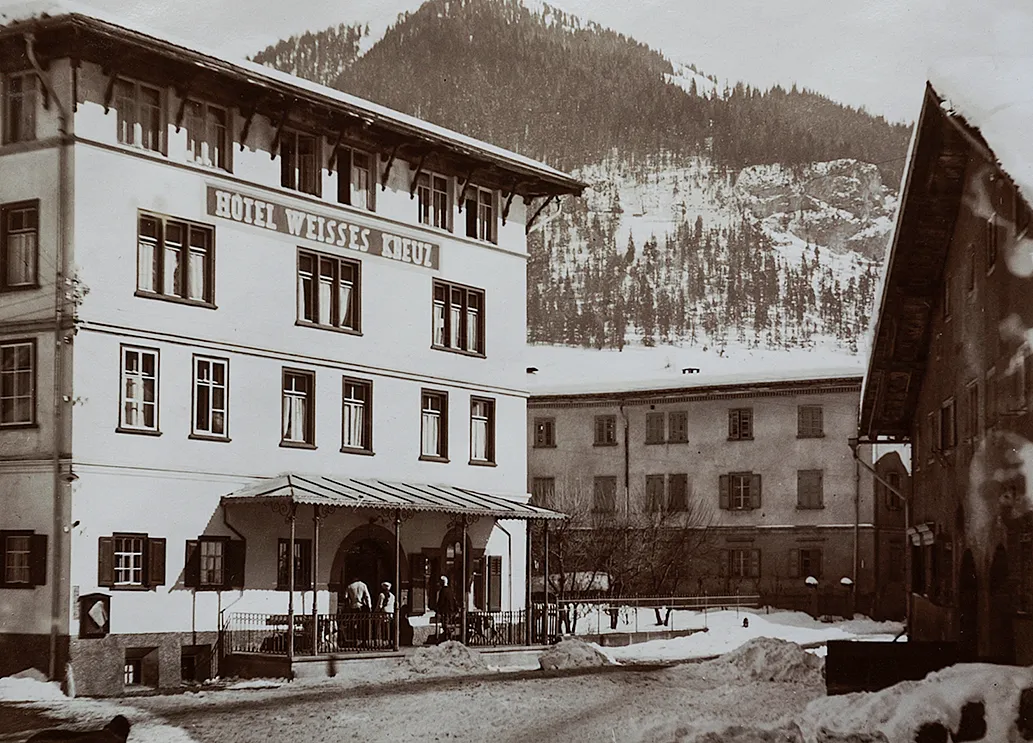
From Engadine farmhouse to the heart of the village
History
A 16th-century Engadine farmhouse, converted into a hotel around 1889 and carefully renovated time and again ever since. The Weisses Kreuz – "Crusch Alva" – tells over 450 years of Bergün history.
A journey through time
- c. 1550
The farmhouse is built
The imposing Engadine farmhouse is built. At most a tenth of its volume is intended for people – the rest for livestock, equipment and provisions for the long winters.
- 1614
The "Crusch Alva" portal
The dated portal leads into the Solèr, the passageway for hay carts. To the left the parlour, behind it the kitchen and the Chamineda, the storeroom.
- 1784
The Arvenstube
The Stüvetta is fitted out – the only living room of the large families of the time. A staircase hidden behind the stove led up to the bedrooms.
- 1889
From farmhouse to inn
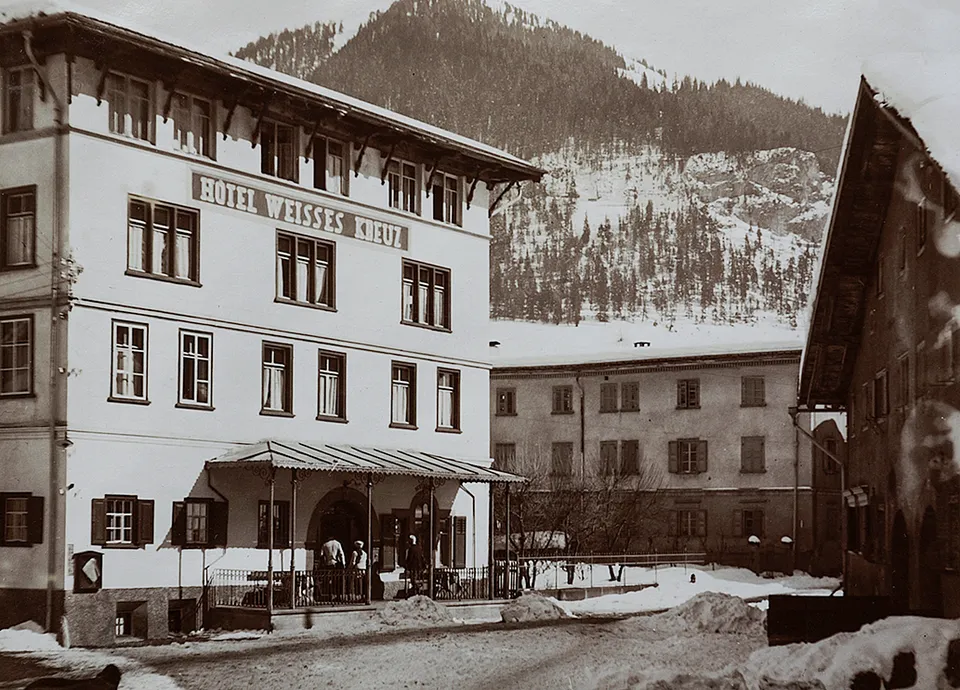
At the height of the stagecoach era, conversion into an inn begins. The raised house even gets a flat roof.
- 1903
The Albula Railway arrives
The Rhaetian Railway opens the Albula line. Bergün becomes a station – and the Weisses Kreuz sits 300 metres from it.
- 1947
The hip roof
During a further extension to create staff rooms, today's hip roof replaces the flat roof.
- 2003
A new lease of life
After turbulent years – including a role in the TV series "Die Direktorin" – Thomas Bär and Ursina Barandun reopen the house and turn it into the heart of the village.
- 2008
UNESCO World Heritage
The Albula Railway becomes a UNESCO World Heritage Site. Bergün lies right in the midst of its most spectacular stretch, with loop tunnels and viaducts.
- 2023
E viva!
After 20 years, Thomas and Ursina hand their jewel over to Raphael Köchli and Britt Messmer, who have carried it forward with great joy since December 2023.
«A meeting place with a unique atmosphere – for young and old, locals and visitors alike.»
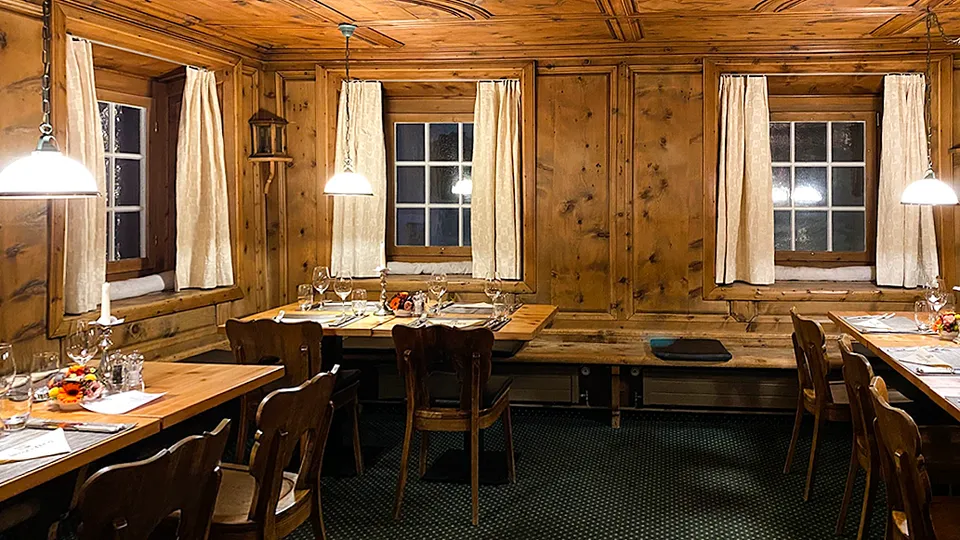
The house today
The floor plan, and substantial parts of the cellar and ground floor, still match the original appearance. The entrance door and the splayed windows leading to the Arvenstube recall the old Engadine farmhouse – above all, though, it is the Stüvetta of 1784.